The Atlanta Intersections With the Most Car Accidents (And What To Do If You're In One)
By Omar A. Cooper, Esq. · 2026-05-27
Atlanta's busiest intersections see thousands of vehicles a day — and a disproportionate share of crashes.
If you drive in metro Atlanta, you already know: some intersections just feel cursed. You inch through them holding your breath, and sooner or later, somebody gets hit. As a personal injury attorney who has spent years handling crash cases out of our office on Peachtree Street, I can tell you the same handful of intersections come up over and over again in police reports, ER intake forms, and Fulton County State Court filings.
This post breaks down the Atlanta intersections most car accidents seem to happen at, why they're so dangerous, and — most importantly — what you should do in the minutes, hours, and days after a wreck to protect your health and your legal rights.
Why Certain Atlanta Intersections Are Crash Magnets
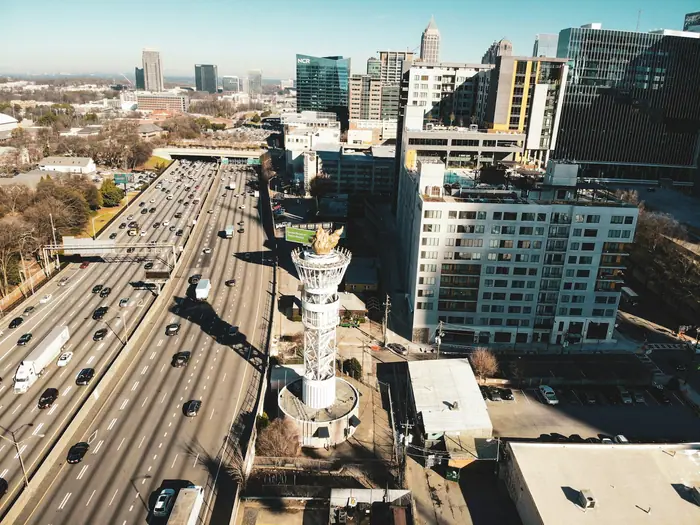
Atlanta's intersection problem isn't random. It's the product of decades of car-centric planning, explosive population growth, and a road network that was never designed to move 6 million people a day. According to Georgia Department of Transportation (GDOT) crash data and reports from the Atlanta Regional Commission, a small percentage of intersections account for an outsized percentage of injury crashes across Fulton, DeKalb, Cobb, and Gwinnett counties.
The common ingredients we see again and again:
- High traffic volume mixing with frequent turning movements
- Short yellow lights and aggressive red-light running
- Confusing lane configurations where highways dump onto surface streets
- Pedestrian crossings on wide, fast roads with limited visibility
- Distracted driving — phones, navigation apps, and food on the go
The Atlanta Intersections We See in Crash Cases Most Often
Based on public crash data and the cases that come through our doors, here are the metro Atlanta intersections that consistently rank among the most dangerous. If you got hurt at one of these, you are not alone — and you are not crazy for thinking the intersection itself shares part of the blame.
1. Northside Drive & 17th Street (Midtown/West Midtown)
This intersection sits near the Connector and feeds traffic to and from Georgia Tech, Atlantic Station, and a wave of new development. Drivers come off the highway hot, change lanes through the intersection, and t-bone turning cars on the regular.
2. Piedmont Road & Roswell Road (Buckhead)
Five-way intersections are nightmares, and Buckhead has more than its share. Visibility is limited, signal timing is tricky, and Friday-night Buckhead traffic adds impaired drivers into the mix.
3. Ponce de Leon Avenue & Moreland Avenue
This Old Fourth Ward / Little Five Points corner combines heavy pedestrian traffic, MARTA buses, and drivers cutting through to avoid I-20. Pedestrian and bicycle crashes here are a recurring problem.
4. Cobb Parkway & Windy Hill Road (Marietta)
Cobb Parkway (US-41) is a high-speed surface arterial. Add Cumberland mall traffic, Braves game-day surges, and the I-285 interchange a stone's throw away, and you get one of the most rear-end-heavy intersections in Cobb County.
5. Holcomb Bridge Road & Georgia 400 (Roswell/Alpharetta)
The 400 exits funnel high-speed traffic right into a congested commercial corridor. Left-turn collisions and rear-end pileups dominate the police reports here.
6. Memorial Drive & Candler Road (Decatur)
A wide, fast east-DeKalb corridor where pedestrian fatalities have been a documented problem for years.
7. Mt. Vernon Highway & Roswell Road (Sandy Springs)
A perfect storm of school traffic, hospital traffic, and commuters trying to shortcut around I-285.
Intersection crashes often involve side-impact and left-turn collisions — some of the most injury-prone wreck types.
What To Do in the First 24 Hours After an Intersection Crash
What you do — and don't do — in the first day after a wreck can shape your case for the next two years. Here's the playbook I give friends, family, and clients.
- Call 911 and stay at the scene. Get an official Georgia Uniform Motor Vehicle Accident Report. Don't agree with the other driver to "just exchange info."
- Get medical attention the same day. Adrenaline masks soft-tissue injuries, concussions, and internal trauma. Gaps in treatment are the #1 thing insurance adjusters use to undercut a claim.
- Photograph everything. All vehicles, license plates, the intersection itself, traffic signals, skid marks, debris, and your injuries. Wide shots and close-ups.
- Get witness names and numbers. Police often don't include independent witnesses in the report, and they're gone forever once the tow truck leaves.
- Do not give a recorded statement to the other driver's insurance company. You are not required to, and anything you say can be twisted later.
- Write down your version while it's fresh — what you saw, heard, and felt in the seconds before impact.
- Talk to an Atlanta car accident lawyer before signing anything from any insurance company.
Why the "official story" isn't always the real story
Police officers at the scene are doing their best with limited information. They didn't see the crash. They're piecing it together from skid marks, vehicle positions, and statements from rattled drivers. We've handled cases where the initial police report blamed our client — and a deeper investigation (intersection cameras, nearby business surveillance, GDOT signal-timing records) flipped the entire case.
How Georgia Law Treats Intersection Crashes
Georgia is an at-fault state with modified comparative negligence. Under O.C.G.A. § 51-12-33, you can recover damages as long as you are less than 50% at fault — but your recovery is reduced by your percentage of fault. That's why insurance companies fight so hard to pin even a sliver of blame on you at intersection crashes, where fault is often genuinely shared.
The statute of limitations for most Georgia personal injury claims is two years from the date of the crash (O.C.G.A. § 9-3-33). That sounds like a long time. It isn't. Evidence disappears — surveillance footage gets overwritten in 30 days, witnesses move, memories fade.
Common injuries we see from intersection wrecks
- Concussions and traumatic brain injuries
- Whiplash and cervical disc injuries
- Shoulder and rotator cuff tears from seatbelt forces
- Wrist and hand fractures from bracing on the steering wheel
- Knee injuries from dashboard impact
- Back injuries — herniated discs, lumbar strain
Every case is different, and the value of any claim depends entirely on the specific facts — the severity of injuries, the available insurance coverage, the medical treatment, the impact on your life and work, and the strength of the liability evidence. Past results do not guarantee future outcomes.
A free consultation is the easiest way to understand whether you have a claim worth pursuing.
When To Call a Lawyer (and When You Probably Don't Need One)
I'll be straight with you: not every fender-bender needs a lawyer. If your car has a scratched bumper and you walked away feeling fine the next morning, you may be able to handle the property-damage claim yourself.
You should strongly consider calling a Georgia car accident attorney if any of the following are true:
- You went to the ER, urgent care, or any doctor after the wreck
- You missed work — or might
- The other driver's insurance company is calling you, fast
- Liability is disputed or unclear
- There were multiple vehicles, a commercial truck, or a rideshare involved
- The other driver was uninsured or underinsured
At Cooper Law, consultations are free and there's no pressure. If we don't think you need a lawyer, we'll tell you. If we may be able to help, we'll explain exactly how. You can request a free case review any time.
How long do I have to file a car accident claim in Georgia?
Under O.C.G.A. § 9-3-33, you generally have two years from the date of the crash to file a personal injury lawsuit in Georgia. Property damage claims have a four-year window. There are exceptions that can shorten or extend that deadline — for example, claims involving government vehicles have much shorter notice requirements — so it's worth checking with an attorney early.
What if the police report says the crash was my fault?
A police report is not the final word. Officers weren't there when the wreck happened, and reports are sometimes corrected or contradicted by surveillance video, witness statements, or accident reconstruction. We've handled cases where the initial fault determination was reversed once a full investigation was done.
Should I talk to the other driver's insurance company?
Generally, no — not without speaking to a lawyer first. You are not legally required to give a recorded statement to the other driver's insurer, and adjusters are trained to ask questions designed to minimize your claim. Your own insurance company is different; you usually do have a contractual duty to cooperate with them.
What does it cost to hire Cooper Law for a car accident case?
We handle personal injury cases on a contingency-fee basis. That means no upfront cost to you — our fee comes out of the recovery if and when we obtain one. If there is no recovery, you don't owe us an attorney's fee. The specific percentage and any case costs are spelled out clearly in a written agreement before we start.
What if I was a passenger, pedestrian, or cyclist at the intersection?
You may still have a claim. Passengers almost always have a claim against one or more drivers. Pedestrians and cyclists hit at intersections often have claims against the driver who hit them, and sometimes against other parties depending on the facts. Each situation depends on the specific circumstances, so a consultation is the best way to find out what options you have.
Talk To Cooper Law About Your Atlanta Intersection Crash
This blog post is general information, not legal advice. Reading it does not create an attorney-client relationship with Cooper Law. Every case is different, and the outcome of any claim depends on the specific facts and applicable law.
If you or someone you love was hurt at one of Atlanta's dangerous intersections — whether in Buckhead, Midtown, Decatur, Marietta, Roswell, Sandy Springs, or Alpharetta — we may be able to help you understand your options. Call Cooper Law at (470) 852-6328 or request a free case review online. Our office is at 260 Peachtree St NW, Atlanta GA 30303, and we serve clients across metro Atlanta and the State of Georgia. There's no fee to talk, no pressure, and no obligation — just a straight conversation about what happened and what comes next.
Related Cooper Law practice areas
Marietta Car Accidents · Decatur Car Accidents · Sandy Springs Car Accidents
Free Case Review
Share what happened — a member of our team will review your case at no cost.
Name
Phone
How can we help?
Request My Free Case Review
Thank you!
We received your request and will reach out shortly.
Something went wrong. Please try again or call us directly.
Reach out to Cooper Law for a free consultation; we'll review your situation and outline the best next step.
Free Case Review
Share what happened — a member of our team will review your case at no cost.
☎ Call (470) 852-6328